Nkosiyabo Frank Nyoni
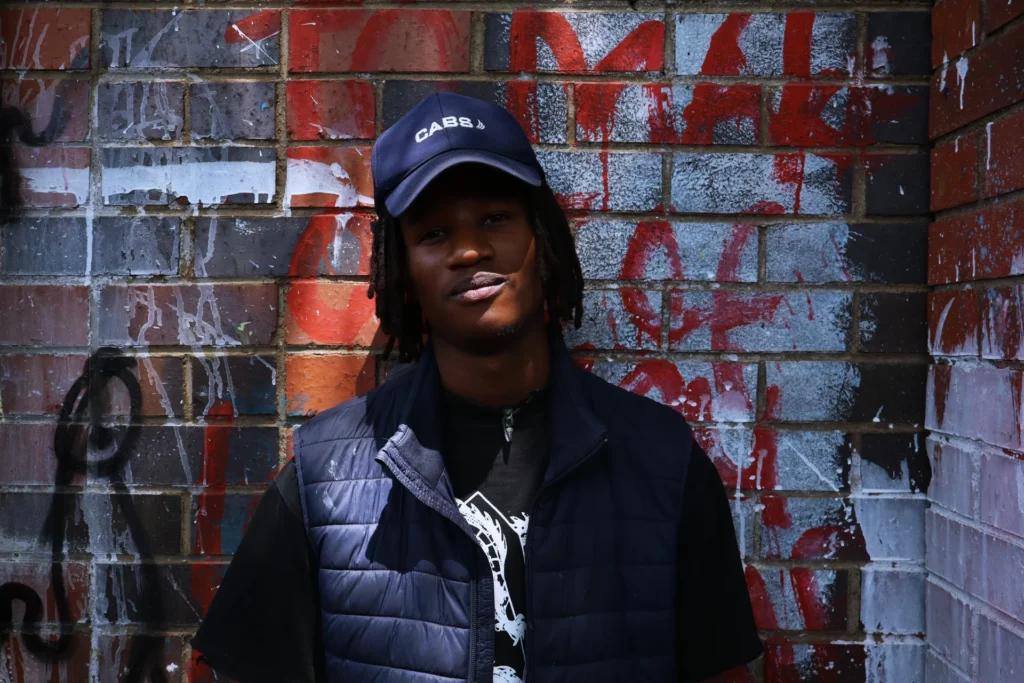
Nkosiyabo Frank Siwela Nyoni, Abstract Expressionist Artist
Born 2002 in Mbare, Harare, Zimbabwe
Lives and works in Harare, Mbare
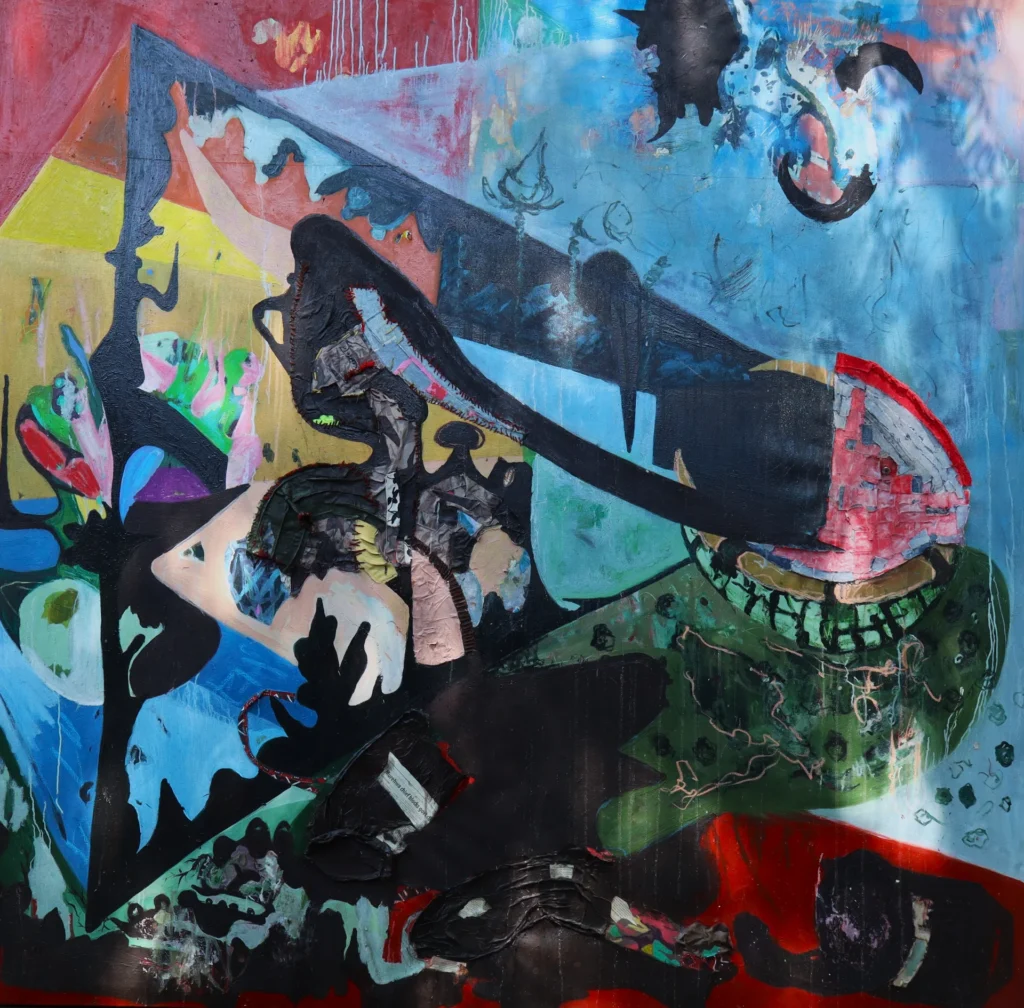
Nkosiyabo Frank Siwela Nyoni is an Abstract Expressionist Artist creating paintings rooted in what he calls prayer points—sites of gathered energy. These places are not always visible or named; they reveal themselves only through making, when the surface begins to speak.
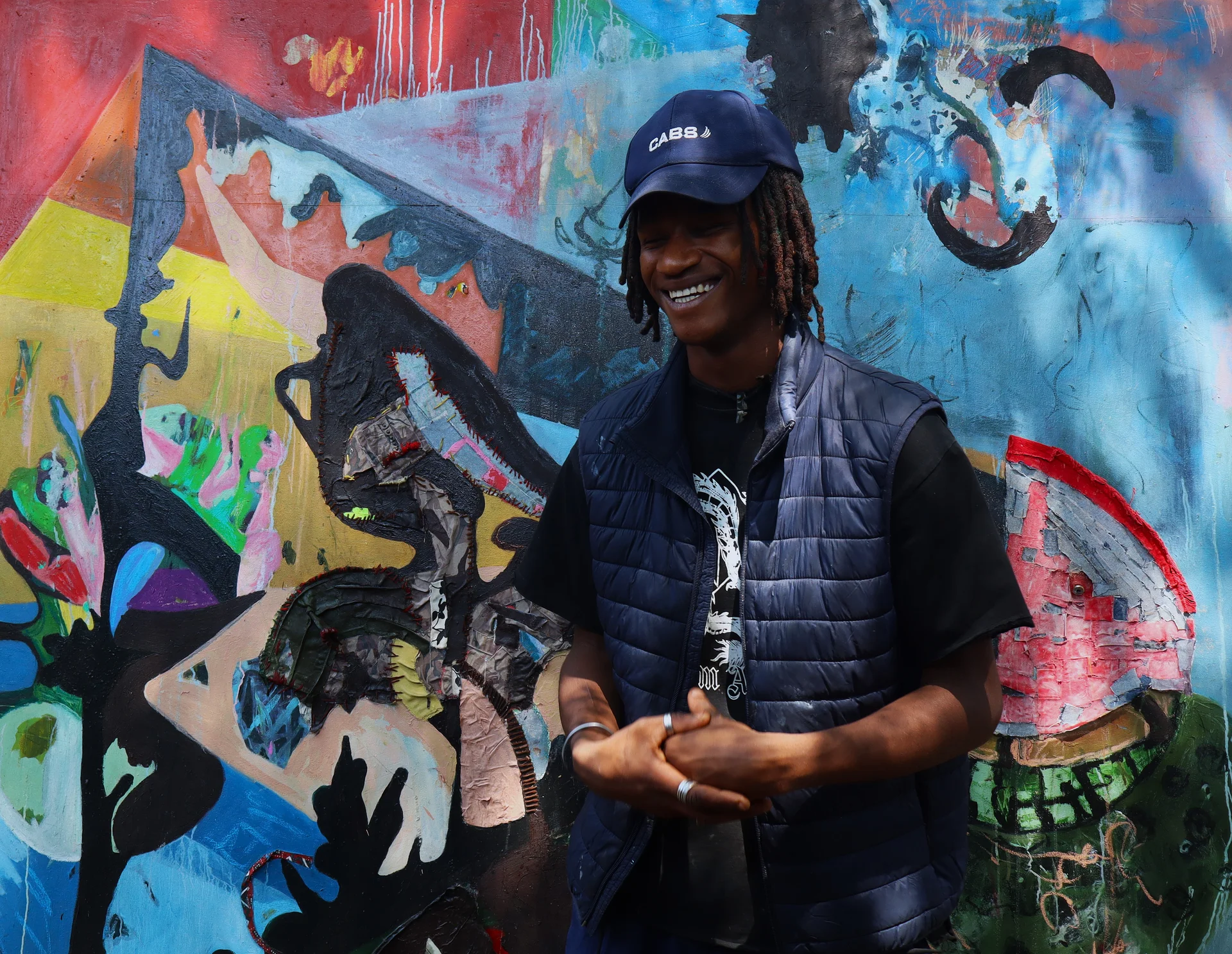
His materials are not passive. They respond, resist, and remember. Scratches, rhythms, and liquid forms guide his hand, while colour becomes both language and compass. He thinks through colour, allowing it to carry emotion, movement, and pulse across the surface. Paint is handled not as substance alone, but as feeling— released through form and gesture.
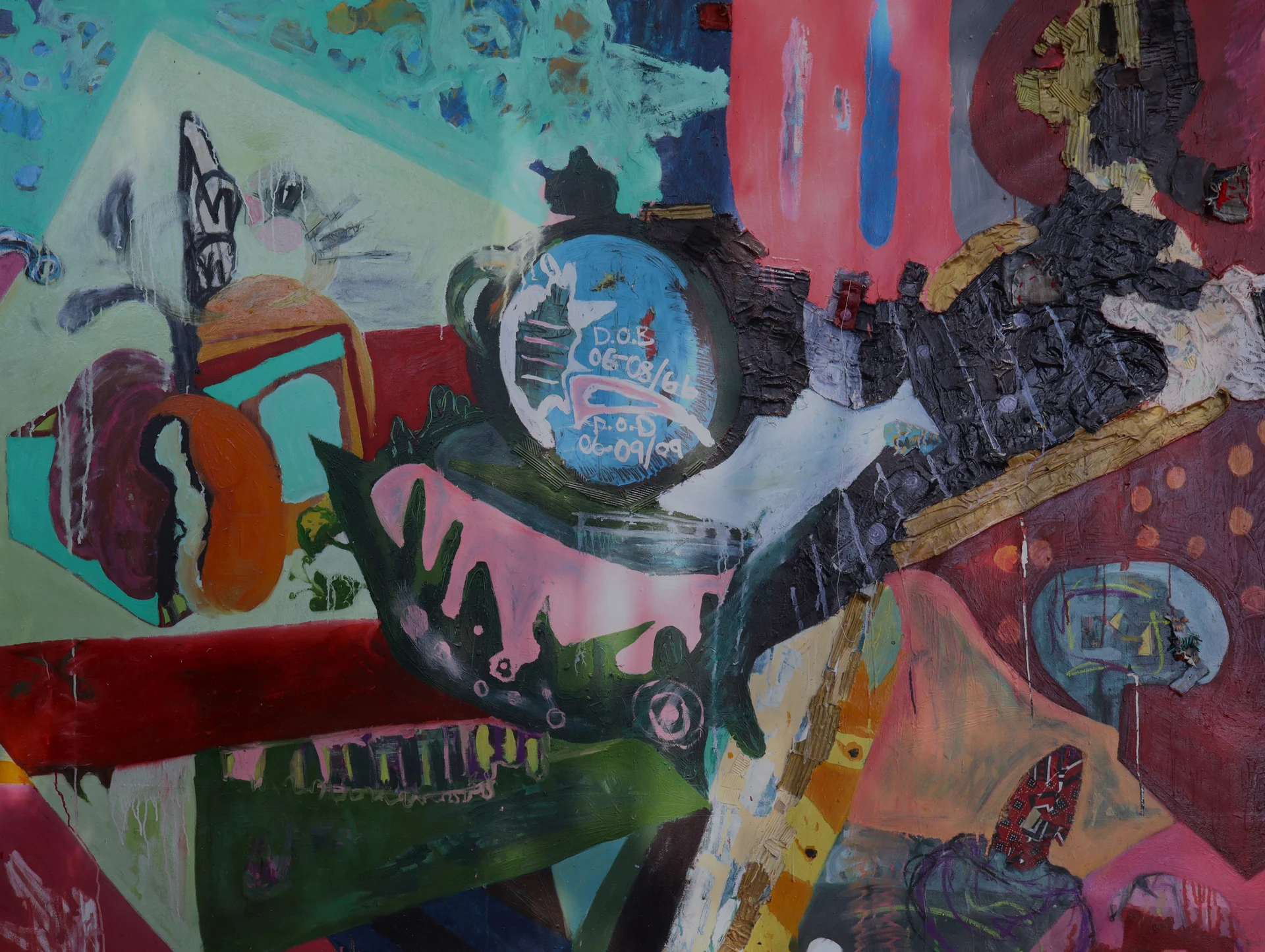
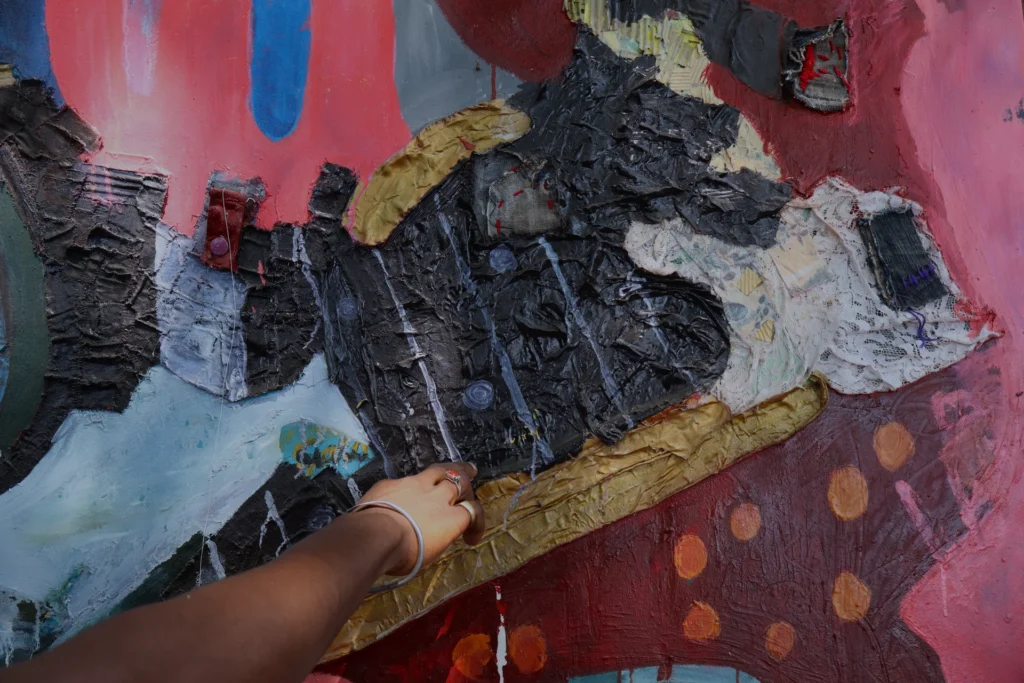
Working in mixed media, Nyoni folds tradition into an evolving visual gramma. Experimentation is central to his process: crossing boundaries, marking and wounding the canvas, refusing stillness.
Currently a resident at Mbare Art Space, Nyoni is challenging himself through painting spaces he has never physically seen. Rather these are spiritual landscapes arriving into his mind as visions. These landscapes are given a physical presence through fragments of known textures and traces of daily life.
Surrender is part of his method. He begins with ink that drips and flows, rejecting fixed edges and absolute control. For density and depth, he sometimes mixes oil into the ink. He imagines each painting as a passage from darkness into light, like walking through a tunnel without certainty of exit. The process is not linear. “I create something, then destroy it, bury it under layers, leave it for days, and return when it’s dry and thick to carve a focal point. The paint dries into a warm brown—like memory made visible. This cycle of construction and deconstruction happens over and over until harmony emerges from chaos.”
Recently, Nyoni has stained canvases with traditional Zimbabwean beer such as Chibuku, allowing fermentation and residue to roughen the surface. He reflects on Rufaro Mhamba as colonial trace—a reminder of how, in the 1890s, European brews displaced indigenous brewing practices, dismissed as primitive and threatening to life. These stains hold both loss and resistance, history seeping into the skin of his work. In this way, his medium becomes a living archive. Nyoni studies how visual language can carry memory, belief, and transformation.
A Moment in Time with Nkosiyabo Nyoni
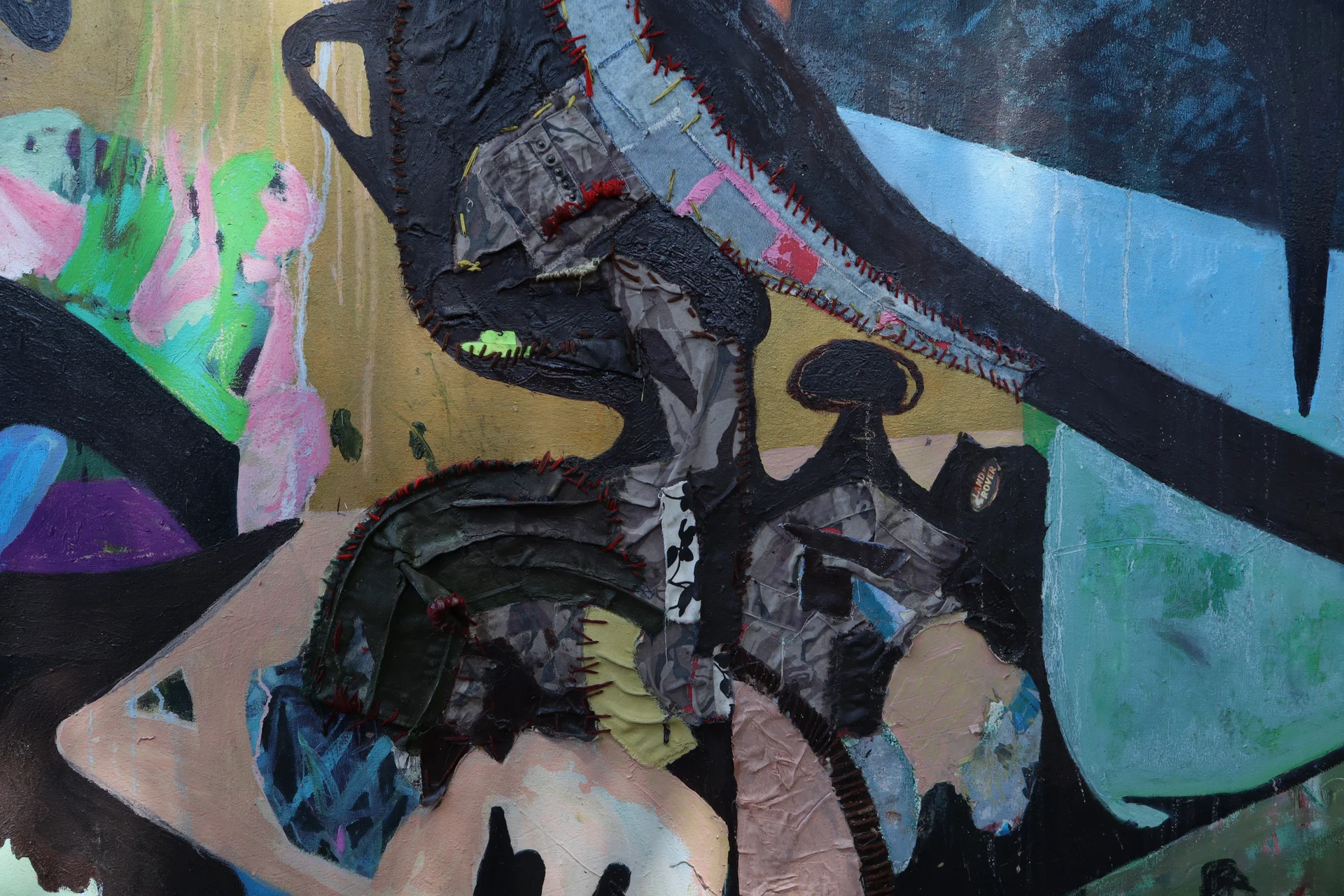
I am deeply intrigued by Nkosiyabo’s process and stream of consciousness as he installs his recent works. Shadows emerge through the juxtaposition of sunlight, which simultaneously activates and interrupts the surfaces of his practice. My eyes absorb colour, stitched materials, and layered dimensions, all drawing the work beyond a strictly two-dimensional plane. While the work remains deeply personal to Nkosiyabo, he grants the viewer the freedom to engage and interpret it subjectively. In this short encounter with his art, I am transported into a quiet space of solitude.
My initial impressions of Nkosiyabo are such that art is not merely an extension of who he is, but the totality of what he embodies. His hands and clothing bear traces of paint, remnants of an ongoing and embodied practice of creating. As this is my first meeting with him, and after spending moments navigating my own subjective responses to his work, I ask, “Who is Nkosiyabo?” He replies, “I am a thinker. I like to describe myself through my work.” I am profoundly moved by mind, a space I imagine inhabiting—one that resists convention and mirrors what I observe within his visual language.
Nkosiyabo speaks of his methodologies, referencing his use of fabric as a material dialogue between his painting practice and his background in fashion design. He also gestures toward spirituality, particularly through the depiction and embodiment of rituals. Central to his process is the layering of the canvas with substances beyond paint; he describes pouring alcohol onto the surface as a means of generating texture while simultaneously invoking traditional brewing practices. This gesture carries symbolic weight, referencing acts of reverence and respect embedded in the ritual of pouring alcohol as offering and remembrance.
Nkosiyabo is in a constant state of practice, continually challenging and refining his craft, an ongoing process we look forward to witnessing as his work continues to unfold.