Yananiso Kunaka
Yananiso Kunaka, Abstract Artist
Born 2001, Harare, Zimbabwe
Lives and works in Harare, Zimbabwe
Yananiso Kunaka is an Abstract Artist whose practice explores the decolonisation of African minds, with a particular focus on Zimbabwe, her homeland. Her work is rooted in the belief that although political independence has been achieved, many Africans remain mentally and spiritually bound by the lasting effects of colonial rule.
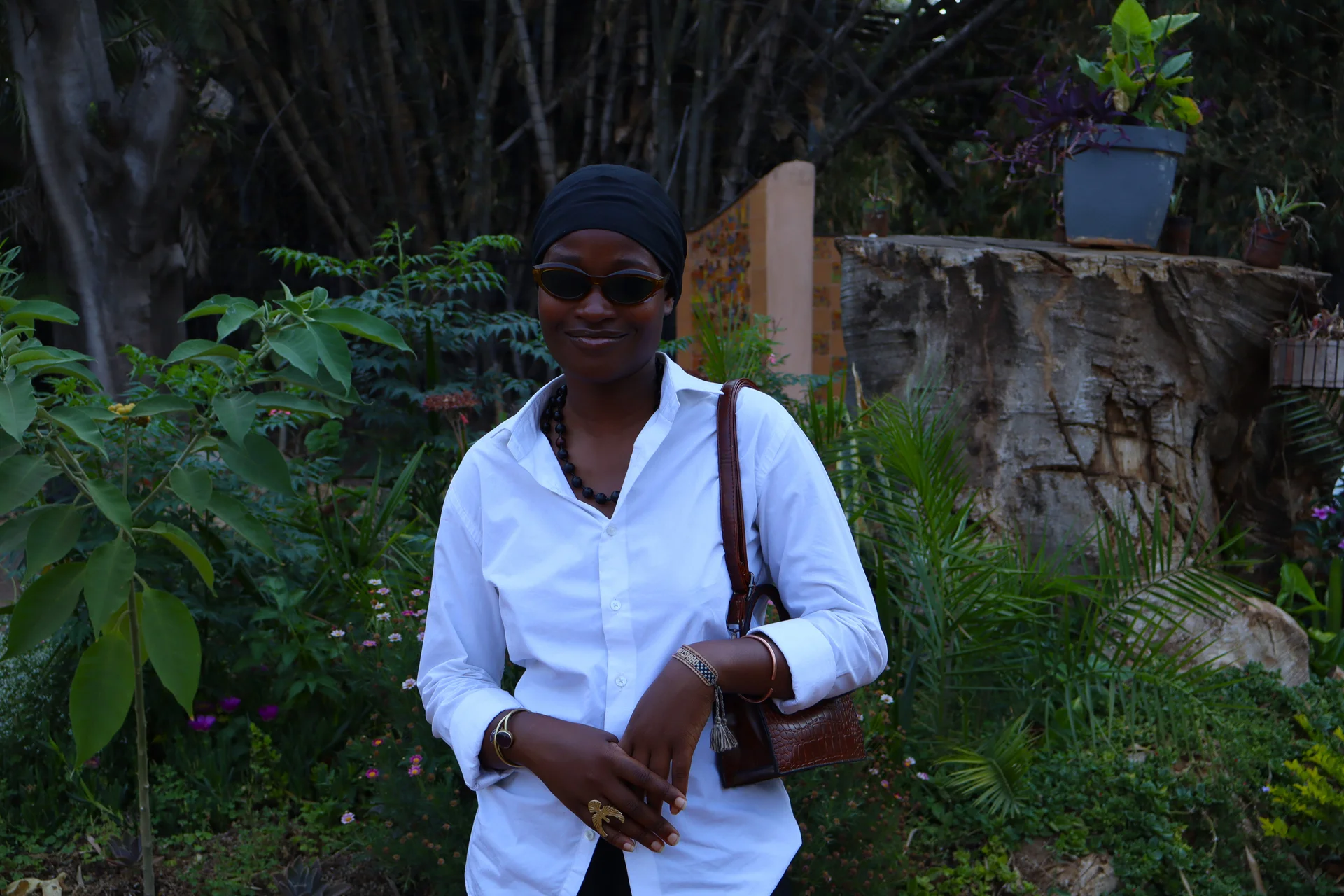
Central to Yananiso’s practice is the reclamation of belief in African identity, spirituality, and self-worth. She aligns with Chinua Achebe’s assertion that decolonisation is a process of restoring confidence by dismantling the psychological damage caused by years of denigration and self-abasement. Through her work, she seeks to recover interrupted knowledge systems and reconnect with African spiritual power that once shaped communal life, rituals, and values.
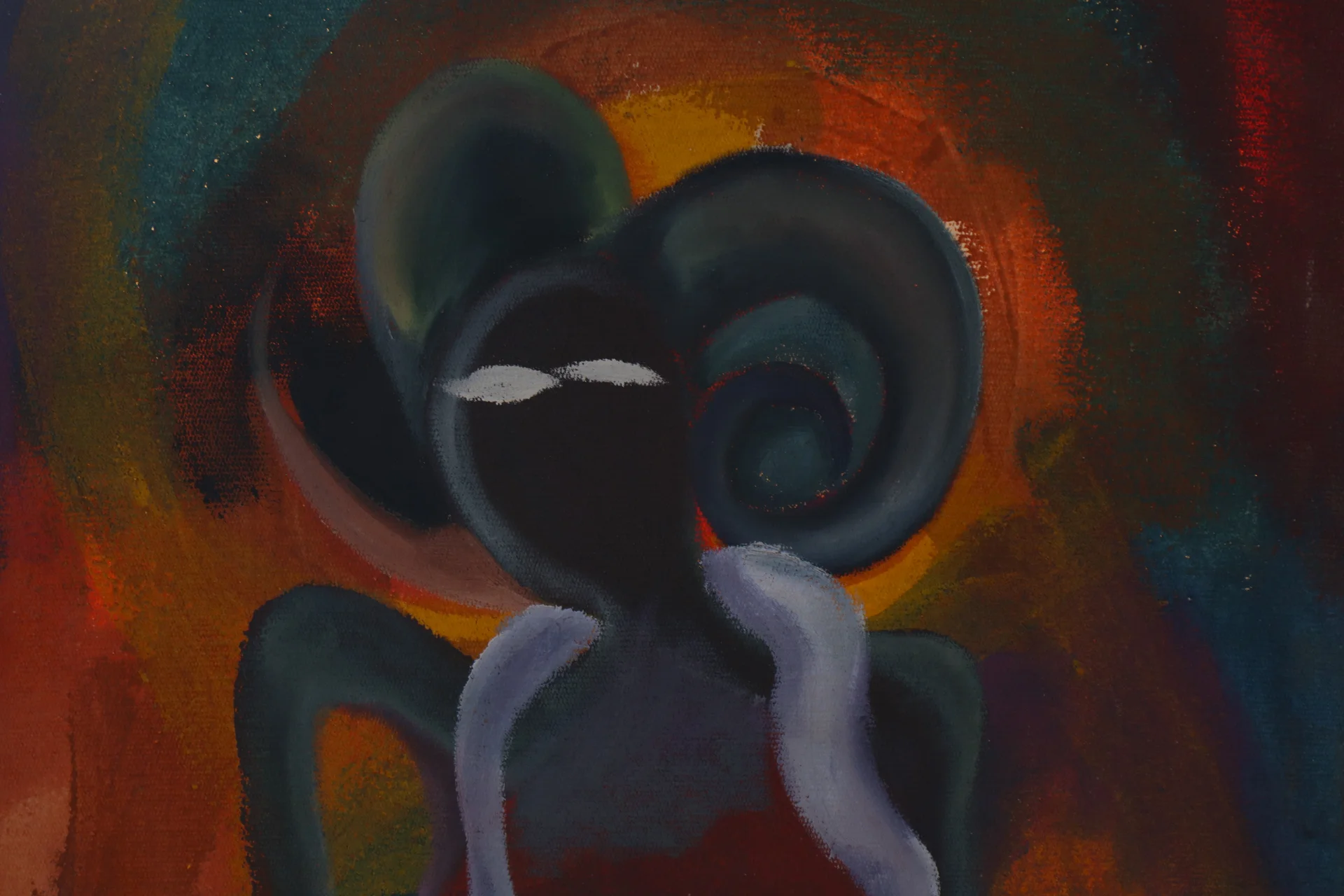
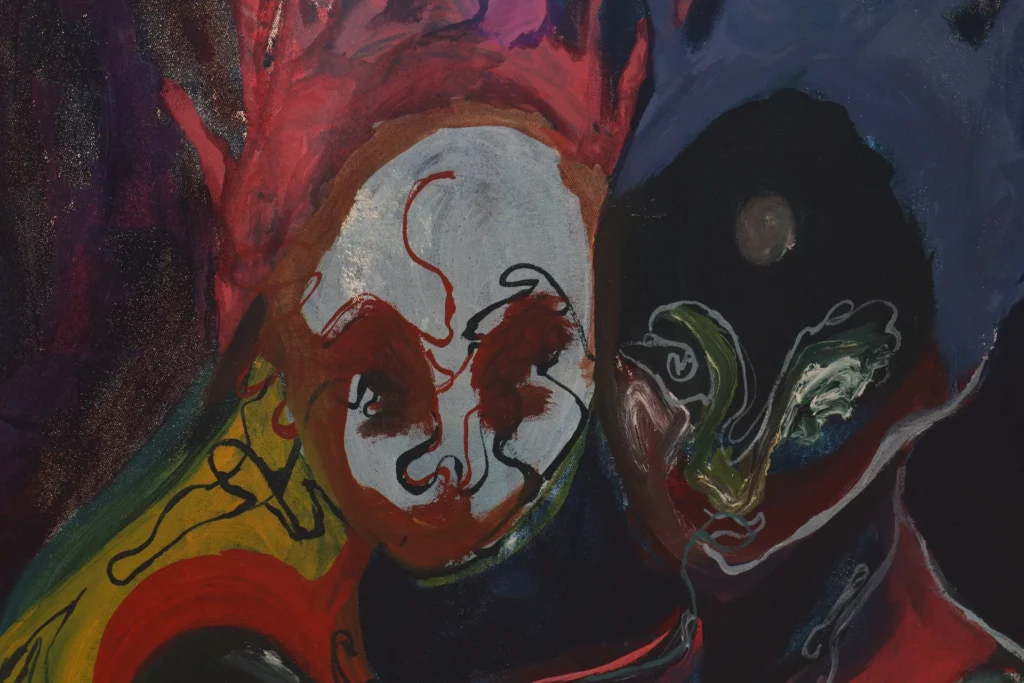
Yananiso questions the reliance on oral tradition alone as a means of preserving history. She believes that knowledge exists beyond spoken narratives — rooted in the land, the walls, the trees, the water, and within human DNA itself. As younger generations increasingly interrogate the inconsistencies within historical literature, her work responds by asking critical questions: Where is the truth? Why were certain histories distorted or erased? What happened to Ubuntu? What knowledge was concealed through colonial religion, education, and propaganda?
Her work critiques Western religious and educational systems that have distanced Zimbabweans from their own cultures, traditions, and folklore. She interrogates what institutions teach about identity and belonging, while questioning where unwritten histories reside, where Ubuntu was disrupted, and how it may be restored within a globalised 21st century.
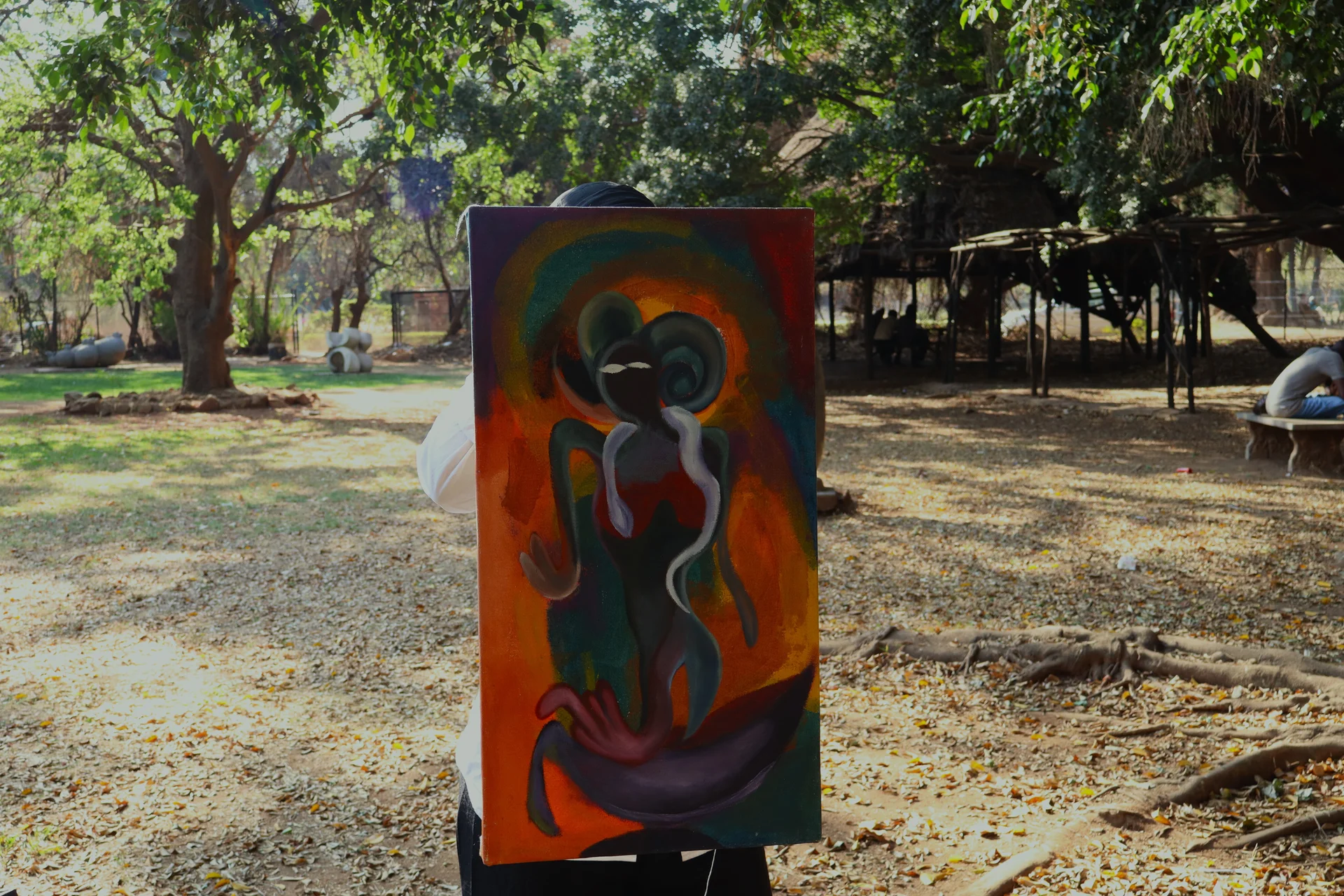
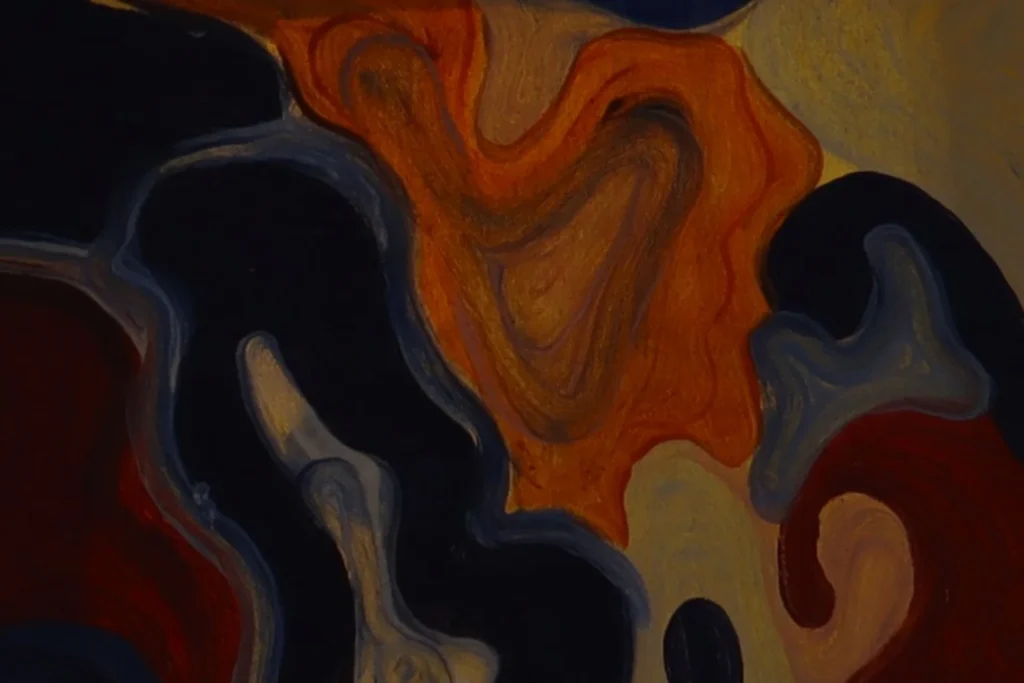
African spiritualism forms the foundation of Yananiso’s visual language. Working primarily through painting, she employs colours that reference African spiritual symbolism. Her process involves conducting oral interviews with elders in her community, allowing ancestral memory and lived experience to inform her work. These narratives are expressed through faces, figures, abstracted forms, and symbolic imagery. She a lso depicts spiritual entities drawn from African folklore, dreams, and intuitive understanding.
Deeply connected to African heritage, Yananiso’s work incorporates references to ritual objects such as masks used in prayer and ceremony. Her practice functions as both artistic expression and spiritual inquiry — a visual archive that seeks to restore memory, reclaim identity, and reawaken the spiritual consciousness that continues to exist within African communities.
A Moment in Time with Yananiso Kunaka
Yananiso Kunaka and I meet at the National Gallery of Zimbabwe. She greets me with the warmth of a hug, and together we walk toward the gardens. We find a place to sit beneath the shade, watching people pass by as conversation begins to unfold.
“I’ve always been a creator, I’ve always enjoyed drawing, sometimes writing poems. It shifts and changes with maturity.”
Yananiso welcomes me into her world, and I find myself returning to childhood—sitting at the feet of a caregiver, listening intently. Before me is an artist, and also a teacher, shaping thought through her work.
“The more I created, the more I realised I want to do this for life. Art is my language, especially when it comes to sensitive issues. I find it easier to speak through a canvas, through layers and colour.”
We pause often, taking in our surroundings. Sitting in the heart of the city, I feel its pulse. Sounds overlap and merge—trees stirring, children singing, cars in motion, birds arriving and departing as part of their journey. Within these layers, Yananiso’s voice holds its own, steady and assured, as she speaks of her conviction to live fully as a creator.
“It would be a mockery to God and the entities that be,” she says, “to be given a gift and not use it.”
Our conversation turns toward spirituality and its place in her work. I reflect on how this presence already moves through her art. Yananiso explains that spirituality is not separate from her practice or her life. Art, for her, is a way of being—an extension of self. Her spirit is in constant dialogue with her work; beyond beautification, each piece carries intention and meaning.
She speaks of African art found in museums across the world—objects created not merely to be seen, but to hold power. Her purpose is to awaken that power within Africans today. Colonial history brought dilution, and with it, an ongoing struggle with identity. Guided by spirit, her work exists in the present moment, while moving steadily toward history.
Yananiso’s words and work provoke reflection. She does not seek beauty alone, but connection, an ignition of something essential within African identity. We look forward to collaborating, and to witnessing Yananiso at work, grounded in her time and purpose.