Alison Baker
Alison Baker, Painter
Born in Bulawayo, Zimbabwe
Lives and works in Victoria Falls, Zimbabwe
Alison Baker is a painter whose installations are shaped by place, time and lived experience. Working primarily with oil on canvas, she favours materials of strength and endurance. Oil paint forms the base while sand, stone, bone, fur, and metal are embedded into the surface. These elements become the physical skeleton of each work, anchoring it to the essential, site-specific nature of its subject.
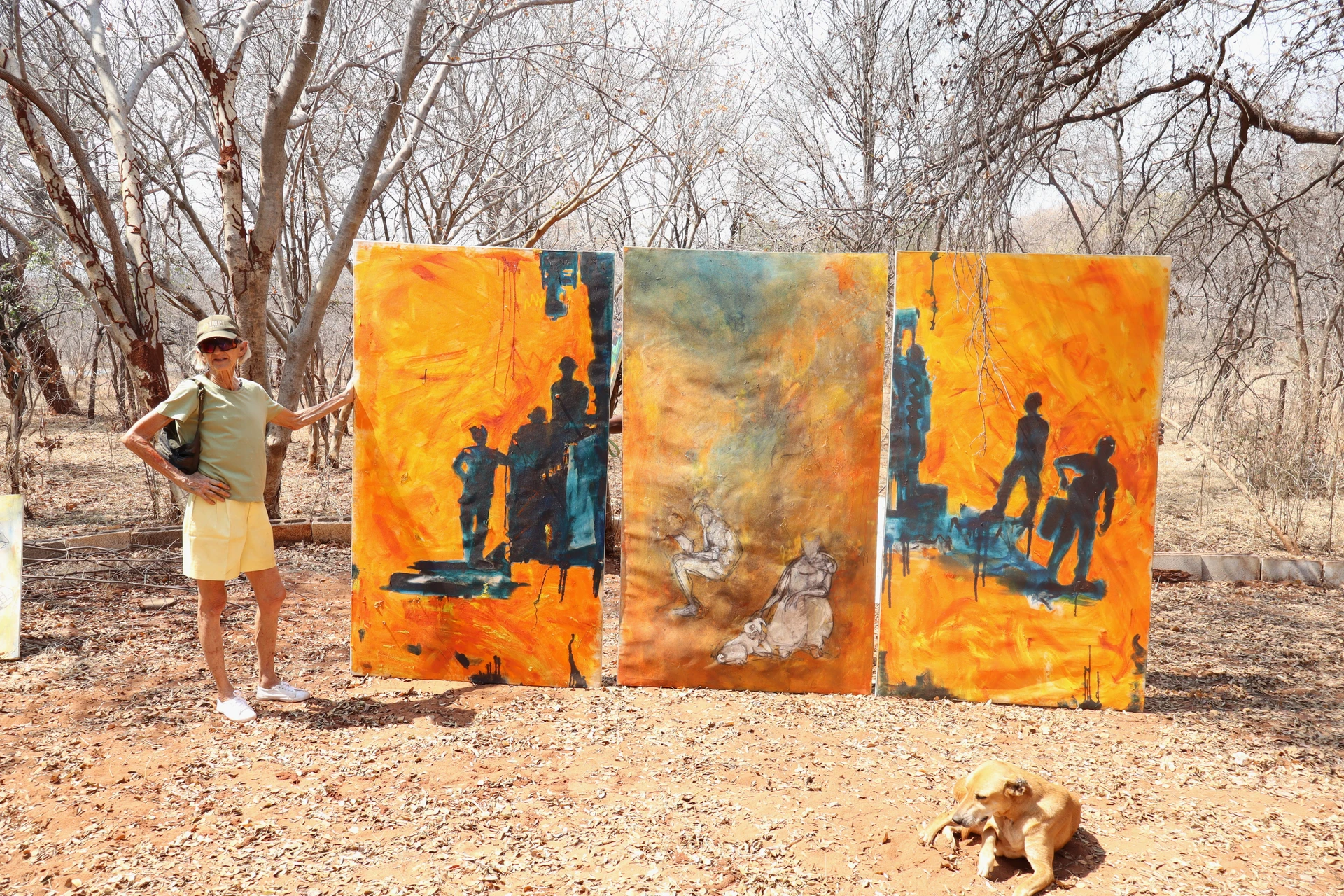
Baker grew up immersed in art and among artists, drawing and painting from as early as she can remember. She draws from life—from the bones of things—seeking what remains when the surface is stripped away. Her days often begin well before sunrise, spent in wildlife areas on patrol as a ranger with her unit. There are no roads, only vastness and silence. Moving through the landscape on horseback, hours are absorbed in observation, rhythm, and presence. These experiences are not separate from her studio practice; they are its foundation.
Her work exists in a space that is semi-abstract and conceptual, shaped by layered meanings rather than fixed narratives. Each painting evolves through accumulation—of marks, materials, and ideas—allowing the work to determine its own form. Baker embraces chance and experiment, welcoming accident and uncertainty, working between control and surrender. Fragments of dried leaves, metals, fur, and bone are combined with oil paint to create surfaces that speak of resilience, erosion, and survival.
Time is intrinsic to Baker’s work, as are the mores of both past and present. Each piece holds a moment: a gesture, a phrase, a word, something seen or felt in passing. In these moments, the ordinary becomes significant. Her practice engages with myth, legend, and past cultures, examining humanity’s ongoing relationship to them and the ancient, enduring influence of Africa on the world. Rooted in landscape, history, and lived experience, Baker’s work is an expression of belonging—for she is, and always will be, African.
A Moment in Time with Alison Baker
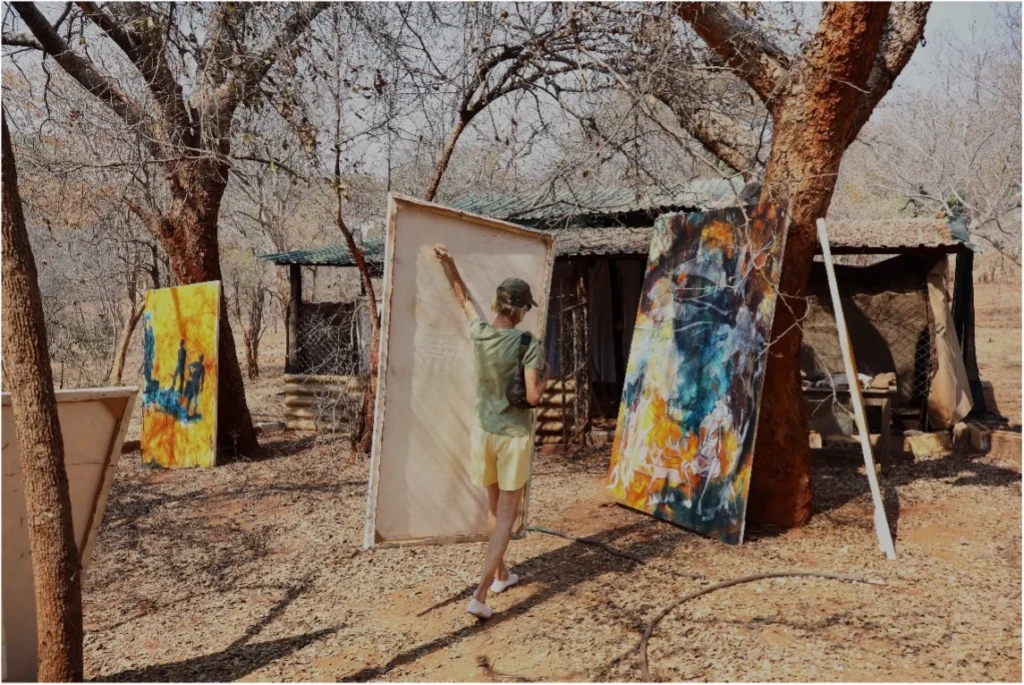
I meet Alison Baker in Victoria Falls, Zimbabwe. She collects me from a beautiful lodge where I will be staying—Phezulu Lodge—and we head straight toward her current studio space. We travel in her four-by-four Toyota, a vehicle that feels less like a machine and more like an extension of Alison herself. I feel the textures of concrete and road as the Toyota endures the terrains of African tarmac. Conversation comes easily, and as it drifts and shifts, I absorb the beauty of my surroundings.
When we arrive at her space, I am greeted by a landscape of bright paintings leaning against deep shades of green and brown. I pause, taking in the authenticity of the moment, appreciating how Alison’s artwork exists within a space she calls home.
I hold many titles, but in this moment, I choose to compartmentalise them all so that I can become a student. As Alison guides me through her studio, our conversation feels like a dance—fluid and intuitive—as she leads me through her works, offering insight into both inspiration and process.
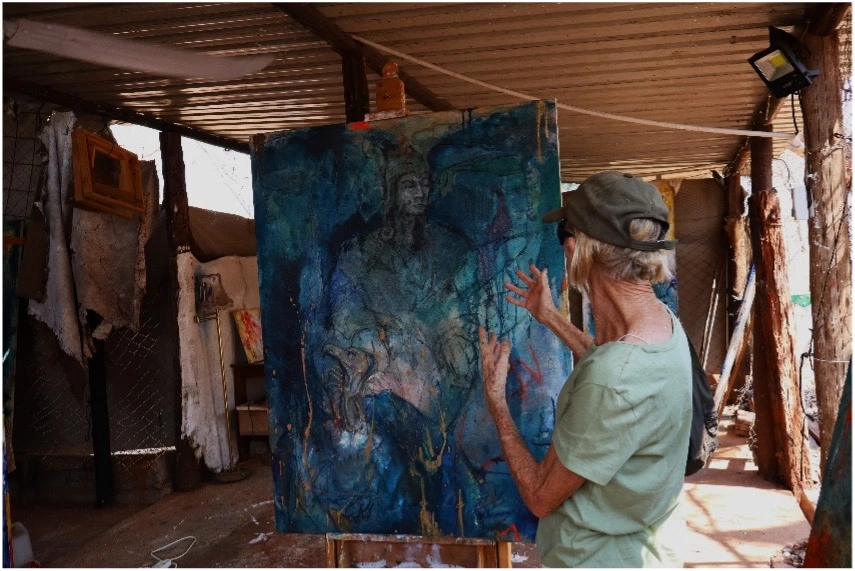
The first striking piece depicts a protagonist folding into himself in visible distress. Shades of blue and orange, layered with textured materials, surround the figure. Alison explains that the work draws inspiration from Antony and Cleopatra by William Shakespeare. The figure represents “man in general”—someone who works relentlessly toward something, only to realise that none of it is working out.
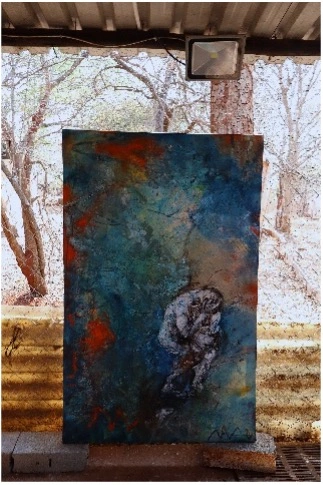
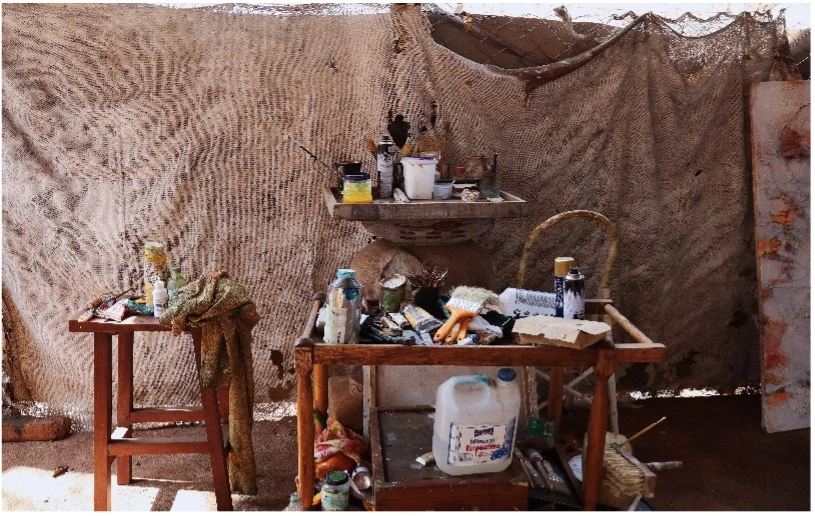
The felt sense of distress seeps through the painting. As I ask about the textured surface beneath the figure, Alison explains, “This is sand from the bottom of a dried-up river. I’ve got to resonate the sense of the sea in it. I just throw it, and whatever happens there starts forming the painting.” She speaks of working with oil paint and dry pastel, and of allowing natural chance to intervene: “If something falls on a painting, I let it be. I allow that to happen.”
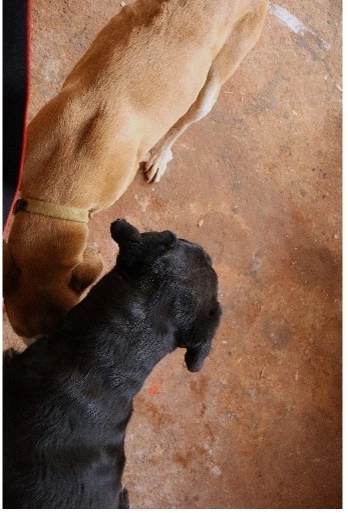
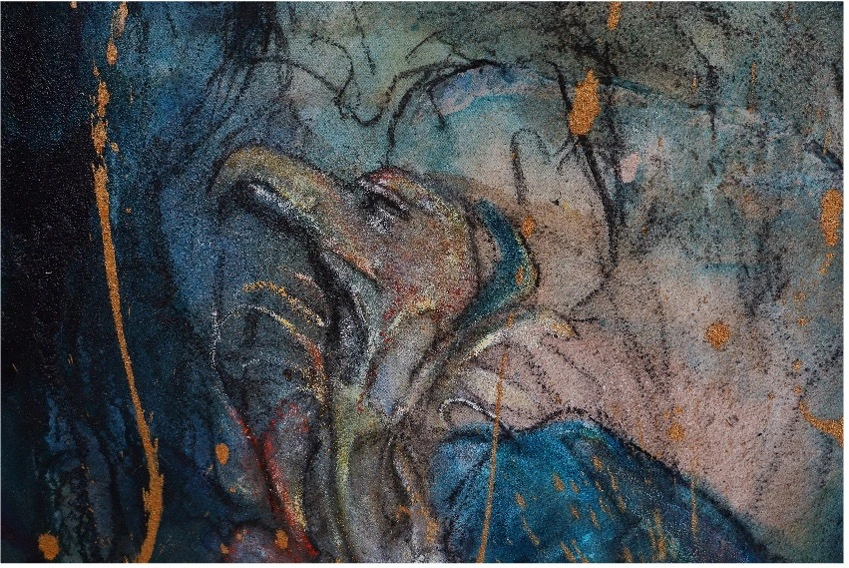
As I stroke her beautiful family of furry friends—including a glowing black Labrador to whom I quickly become attached—we move to a piece titled The Dichotomy of Power. The man depicted represents leadership. Alison reflects on how coming into power brings the illusion of freedom—the belief that you will finally be able to do everything you want—only to discover the restrictions that authority imposes. A vulture appears in the painting, symbolising the frustrations of leadership. Vultures are deeply misunderstood: essential to ecosystems and fiercely loyal, mating for life. We speak about language and symbolism—how vultures are often associated with destruction, yet in reality they sustain life. The leader in the painting is handless, reflecting the loss of power and voice that often accompanies authority, despite being positioned as one who supposedly holds it.
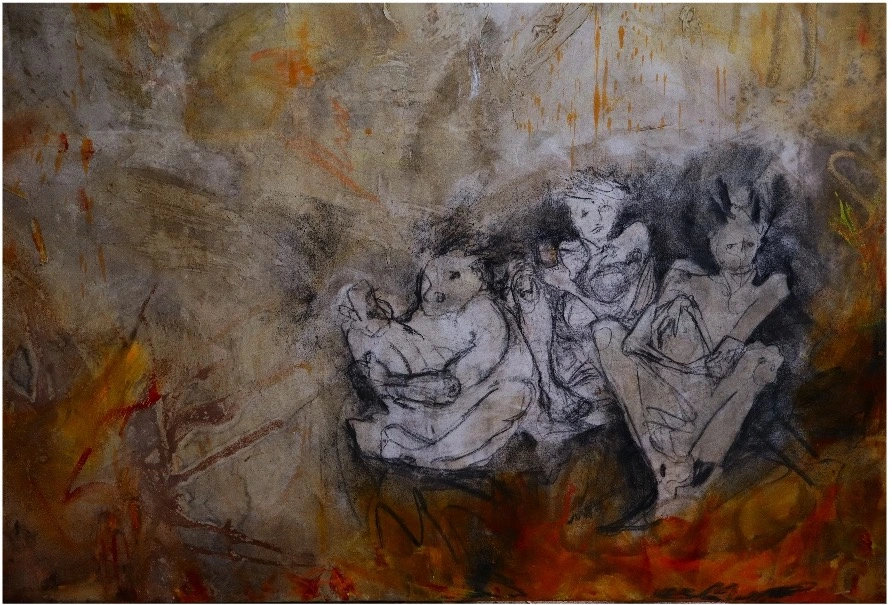
We briefly stop at another piece showing three women huddled together, almost blending into the background yet still distinctly present. Alison speaks about motherhood and the real difficulties women face today. There is pressure not only to be present, but to appear present. This pressure is embodied in a woman glued to her phone while holding her baby, absorbed in a tutorial on how to mother the very child in her arms. Alison reflects on the role of social media in intensifying these expectations and anxieties.
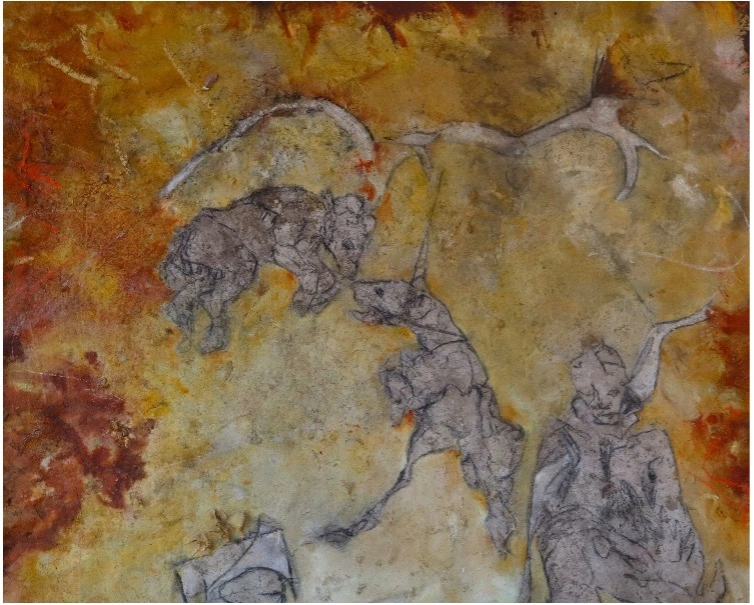
Before moving to her second studio space, we pause to acknowledge an intrinsic part of Alison’s identity. Her work as a game ranger—committed to preserving wildlife and natural habitats—deeply informs her art, alongside her anti-poaching efforts. She points to a painting directly addressing poaching and the suffering of hyenas, describing it as “complex” and “sad.” The work is site-specific, created at the location where an animal had been poached. The hyena had been caught in a snare and wounded by multiple spears. The piece incorporates hyena fur and soil from the site itself, standing as a deeply personal statement and a powerful articulation of Alison Baker’s voice.
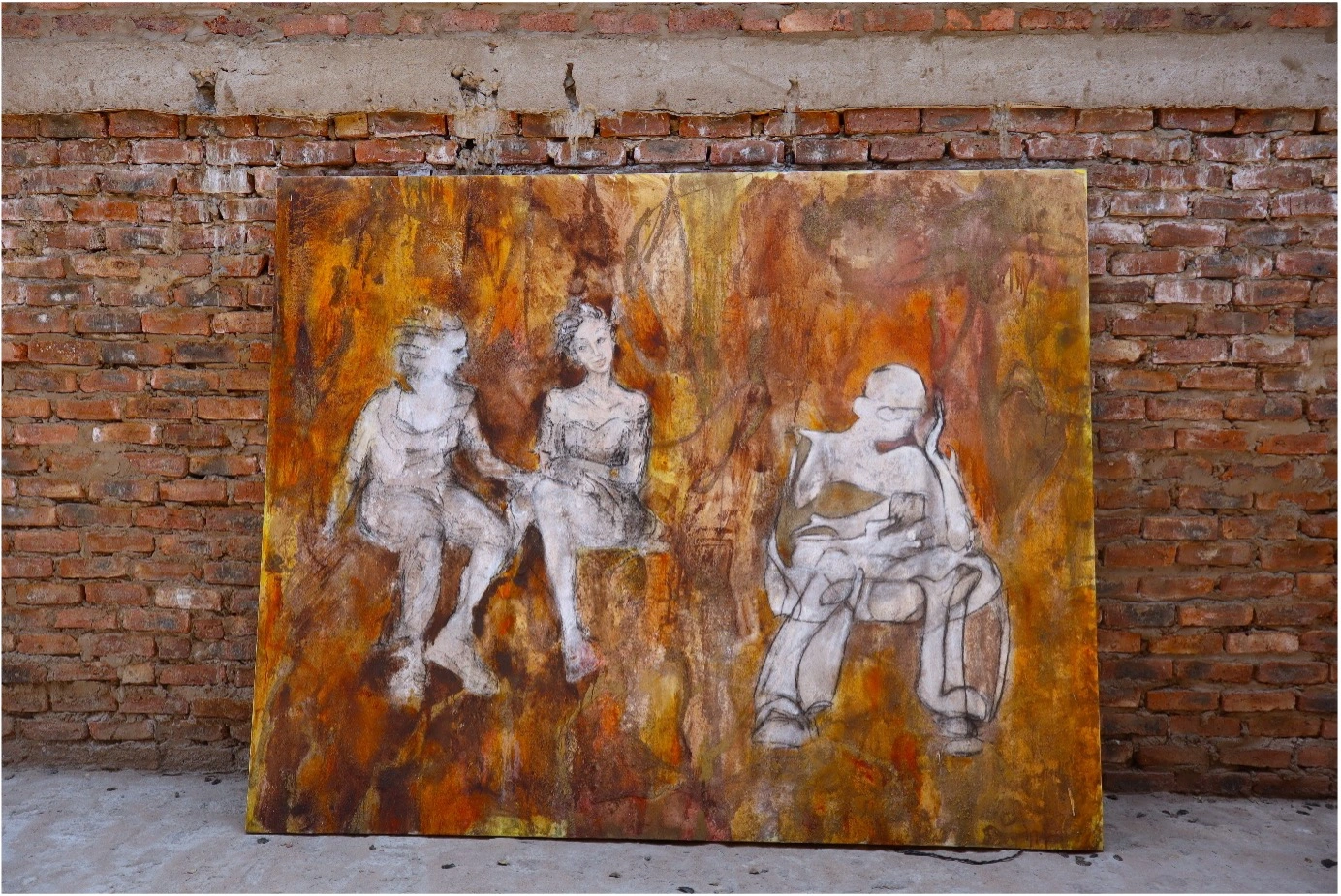
In her new studio space, large-scale works line the walls, each addressing a distinct subject. We conclude our discussion with a playful yet significant piece featuring three figures. On the right sits the “money man,” distracted by his phone. Behind him is his mistress—fully aware of who he is, what he does, and what she intends to do with that knowledge. “She’s clever,” Alison says, as the mistress whispers her plans to a friend. Though light in tone, the painting prompts reflection on the nuances of love, commitment, and the fluid, often unspoken contracts that exist within relationships.